
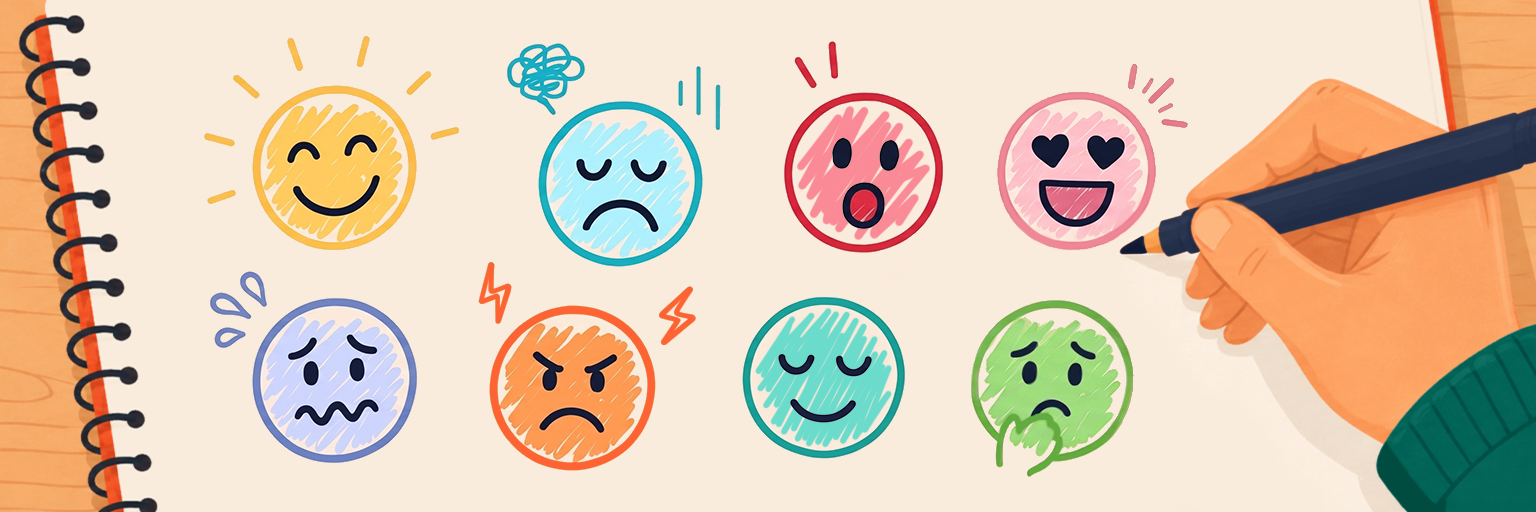
Real Emotion is Better than Artificial Intelligence
How to Use Authentic Humanity to Write Copy that Connects & Converts
This isn’t another article about AI. It’s about love, compassion, empathy, joy, and understanding.
It shows why real human emotion still beats artificial mimicry in advertising. AI can imitate feelings; people respond to lived, believable emotion. Here are practical ways to access that reality when you write.
Feeling = Impact
"People will forget what you said, people will forget what you did, but people will never forget how you made them feel.” – Maya Angelou
We know that content designed to elicit emotional responses drives more engagement and impact than content focused on facts. Countless women aged 35 and up have shared their love for the “I’m coming to the cottage” scene in *Heated Rivalry*. I’m not sure I’ve seen anyone do the same for anything that’s ever been on C-SPAN.
But it’s more than just a feeling that supports the idea of emotion creating results. A 2023 report by the USC Dana and David Dornsife College of Letters, Arts and Sciences points out that advertising campaigns with strong emotional components succeed almost 2x more than campaigns that focus on rational content (31% vs. 16%).
Forbes even calls emotion: “the super weapon of marketing and advertising.”
Putting Emotion To Work
In general, allowing your emotions to linger close to the surface is not the best idea – while at work. We surely don’t want to let a casual mention of a Love Island spoiler to send us into a spiral. Or attempt to hug a colleague when they say an uplifting word on a tough day. And your CEO doesn’t really need to hear all the blubbery details about the kittens you rescued from the landfill.
As creative writers and content creators, we must cover and uncover our emotions fast. This helps us write with passion about a mom who beat breast cancer. It also helps us avoid ugly crying when your boss says you are behind on timesheets. Again.
So how can we do that? How can we transform from stolid business person to sensitive, compassionate copywriter quickly and without making people worry about you?
Here are some simple, yet effective, tips for doing just that.
Watch Some Videos
Specifically, the kind that document people performing acts of kindness. The guy jumping into the ocean to save a lady’s dog. The cop who gives the unhoused man his shoes. The abused and neglected dog who finally finds happiness and love in a forever home. Whatever floats your boat.
I’ve found that spending just a few minutes absorbing content like this can help nudge you into a more open and empathetic headspace. You can more easily find the emotional voice and perspective when you witness real examples of kindness out in the world.
Create A Soundtrack For Your Work
Music can have a profound impact on your mood. It can pump you up, mellow you out or make you feel blue. As a result, it is an incredible tool for adding the exact mood and emotional tone you need to your writing.
I have a playlist that I return to time and again when needing to tap into my empathy, and compassion. I’ll list out some of my favorite go-tos below.
Some of them are a little weird. But they work for me. I would encourage anyone reading this to find tracks of any kind that trigger a feeling with them. It’s all incredibly personal.
Some of my faves (all available on Spotify if you want to check them out):
- Pi’s Lullaby, from The Life Of Pi soundtrack
- Avril 14th by Aphex Twin
- Sand Drawing by Judah Earl
- Elanor (featuring Sir James Galway) by Howard Shore, from The Return of The King soundtrack
- Arrival Of The Birds, from The Crimson Wings: Mysteries Of The Flamingos soundtrack
- The Light by The Album Leaf
- God Yu Tekem Laef Blong Mi by Howard Shore, from The Thin Red Line soundtrack
Most of these are very moving pieces that I use to alter my headspace as I write. They work great for healthcare, education, non-profit and other industries where people’s lives are directly affected.
But you can use music of any kind to inspire any kind of energy and emotion. Just think about the vibe you want to create with your work, and then find music that fits and feels right.
Always pay a little attention when watching movies or listening to playlists (other than your own). You never know when you’ll run across something new that can help with your next project.
Roleplay (In Your Head)
Most creative advertising professionals learn this tried-and-true method early in their careers. But it never hurts to have a reminder.
This tip is to simply put yourself in the shoes of the people you’re trying to reach. Imagine as vividly as you can how they would feel in whatever situation you are trying to capture.
Let’s say you are writing an ad or content for an orthopedic surgery practice. It’s easy enough to say “They can help you get back to your life” – which brands say A LOT.
But instead, imagine what your life would be like if you had painful joints or a chronic condition. What would your emotional state be? How would you feel if your grandson asked you to go to the zoo, but you aren’t sure you could walk for that long?
Get specific. What daily life things are now difficult and frustrating and painful? Try to envision what life would be like if nearly every move you made hurt.
With that understanding, it will be much easier to capture the attention of the target audience, because they will immediately understand that you understand them and what they’re going through. It will also make the “solution”—in this case, orthopedic surgery and care—more appealing. It will feel more relatable to their own experiences.
This technique works with any industry and virtually any story you need to tell.
Writing about air conditioning repair? Think about how frustrating and uncomfortable it is to have your AC go out in July. Think about all the things that get more difficult when your house is blazing hot. And then use that to craft a compelling message.
Get Hooked On The Feelings
Once you get used to using your emotions to create content, you won’t want to work any other way. And it will become a very natural part of your process.
And sure, use AI to provide an outline or some thought starters. I do it all the time. But always inject authenticity, feeling, empathy and understanding whenever and wherever you can.
At High10, we’re ready to help your brand tell insightful, relevant and impactful stories – injected with real emotion. When you’re ready for us, we're here to help you turn feeling into action.