
The Omnichannel Marketing Strategy Guide: How to Build a Connected Customer Experience
Customers do not experience your marketing in separate departments. They may discover your business in a Google search, encounter it again in an AI-generated answer, watch a video on social media, open an email and finally convert through a paid ad or phone call. To the customer, every interaction belongs to one brand.
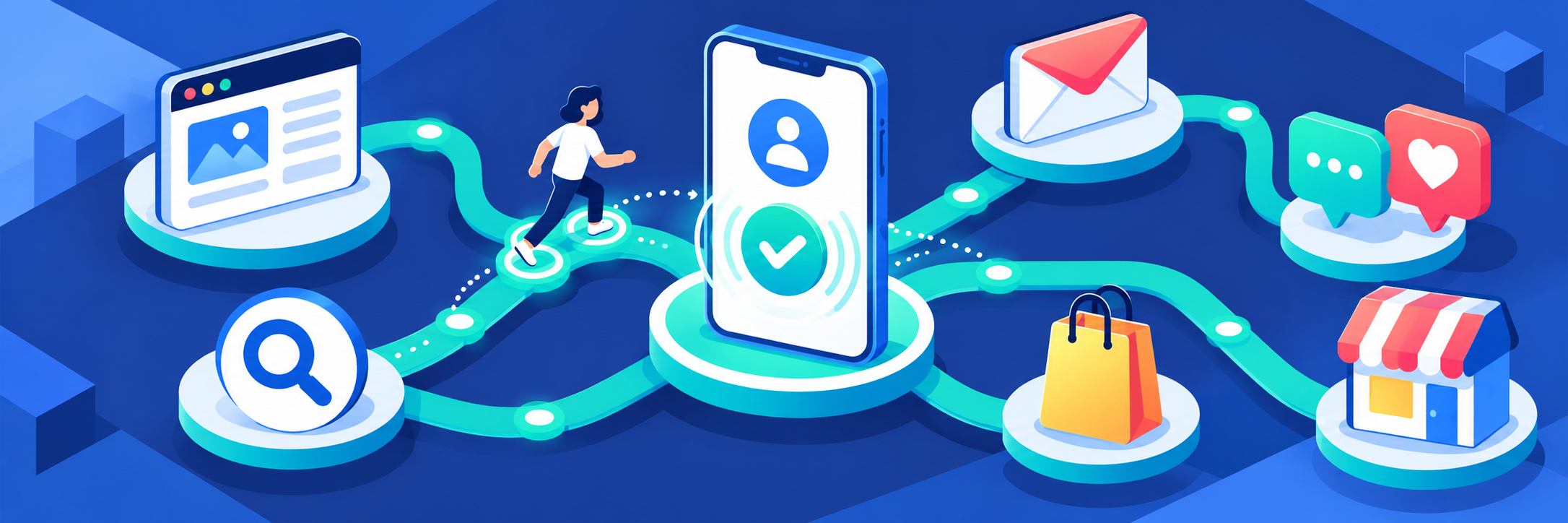
Omnichannel marketing connects those interactions. It gives your audience a consistent experience as they move between search engines, websites, social platforms, email, advertising, physical locations and conversations with your team. It also gives your business a clearer view of how those touchpoints work together to generate leads, sales and long-term customer value.
This guide explains how a connected approach differs from using several channels and how to build a practical strategy around your customers and goals.
What Is Omnichannel Marketing?
Omnichannel marketing is a customer-centered strategy that coordinates messaging, data and experiences across online and offline channels. Each interaction uses context from earlier interactions so the customer can continue their journey without starting over.
Imagine that someone searches for a service, visits your website and leaves without contacting you. Later, that person sees a paid social ad addressing the same need, returns to a relevant landing page and submits a form. Your sales team can see the original source and the content the lead viewed, while future marketing changes to reflect that the person has already converted. That is an omnichannel experience.
“Omni channel marketing” is also commonly used, but “omnichannel marketing” is the preferred spelling. Both describe one connected experience across customer touchpoints.
Omnichannel vs. Multichannel Marketing
Multichannel and omnichannel marketing both use more than one platform, but the way those platforms work together is different.
| Multichannel marketing | Omnichannel marketing |
| Channels are planned separately | Channels support one customer journey |
| Each platform may use its own data | Data is connected across touchpoints |
| Success is evaluated by channel | Success is evaluated by channel and total journey |
| Messaging may be repeated everywhere | Messaging changes with customer context |
| The channel is the organizing principle | The customer is the organizing principle |
A company can run SEO, paid search, social media and email and still be multichannel. It becomes omnichannel when those efforts share goals, insights and measurement. As Salesforce explains, the defining difference is an integrated experience rather than independent channels.
Why Omnichannel Marketing Matters
The modern path to purchase is rarely linear. People evaluate brands across search, AI platforms, maps, reviews, social networks, media, websites and offline conversations. A disconnected strategy creates inconsistent offers, irrelevant follow-ups and incomplete reporting.
A strong omnichannel strategy helps businesses:
- Create a more consistent customer experience. Messaging, design and service expectations stay recognizable wherever customers encounter the brand.
- Reach customers during more decision-making moments. Every channel reinforces the others.
- Improve relevance. Messaging can reflect a person’s interests, location, journey stage or previous actions.
- Strengthen measurement. Connected tracking reveals assisted conversions and longer paths that single-channel reports often miss.
- Make marketing investments work harder. Insights and creative assets can be shared across campaigns, reducing duplication and improving performance over time.
How to Build an Omnichannel Marketing Strategy
Effective omnichannel marketing means choosing the right channels and connecting them around audience needs—not launching everywhere.
1. Begin With Business Goals and Audience Research
Define the outcome before choosing tactics: qualified leads, revenue, appointments, foot traffic, repeat purchases or retention. Establish a few business metrics every channel will support.
Then study how customers research, compare and choose through sales interviews, search behavior, CRM data and competitor analysis. High10’s market research and strategy services turn these signals into a practical plan based on real audience behavior.
2. Map the Customer Journey
Map the path from awareness through conversion, retention and advocacy. For each stage, identify:
- The questions customers need answered
- The channels they are likely to use
- The actions that indicate intent
- The content or reassurance they need next
- The barriers that could prevent progress
A commercial buyer may use search, case studies, LinkedIn, email and sales calls. A local consumer may move from an AI answer to a business profile and phone call in minutes.
3. Audit Channels, Content and Data
List each channel’s audience, purpose, owner and primary metric. Then look for conflicts. Does an ad promise something absent from its landing page? Does sales know which campaign generated a lead? Does email promote a service after the customer purchased it?
Website analytics, ad platforms, call tracking, forms, CRM records and email tools should use consistent naming and exchange useful information. An omnichannel marketing platform can help, but technology cannot repair an unclear strategy or unreliable data.
4. Create a Shared Message and Content System
Consistency does not mean publishing identical content everywhere. It means expressing the same positioning in the format and context that work best for each channel.
Start with a central idea, audience need, proof points and call to action. Adapt that foundation into search-focused content, social posts, paid creative, email, video and sales materials. High10’s SEO+ approach builds discoverable content around audience demand while other channels extend the idea across the journey.
5. Connect High-Value Channels First
Start with one important audience and one measurable journey rather than trying to integrate everything at once. A service business, for example, could connect:
- A search-optimized guide answering an urgent customer question
- Paid search ads targeting high-intent versions of that query
- Retargeting creative that reinforces expertise or proof
- A landing page with consistent messaging and a clear conversion path
- Call and form tracking connected to the CRM
- Email follow-up based on the requested service
High10’s paid media services connect search, social and retargeting with conversion tracking, while social media strategy builds earlier visibility and engagement.
6. Personalize With Purpose
Useful personalization reduces friction. Segment audiences by meaningful signals such as location, industry, service interest or lifecycle stage, then adjust content and follow-up to support the next step. Collect only data that serves a legitimate experience, maintain consent records and give users control over communications.
7. Measure the Entire Journey and Improve It
Channel metrics should connect to business outcomes. Report on both individual channels and the combined conversion path.
Useful omnichannel marketing metrics include:
- Qualified leads, sales or revenue
- Conversion rate by journey and audience segment
- Cost per acquisition and customer acquisition cost
- Assisted conversions and common conversion paths
- Call quality and lead-to-sale rate
- Repeat purchase or retention rate
- Customer lifetime value
- Time from first touch to conversion
Use consistent campaign naming, CRM attribution and offline conversion imports to close measurement gaps. Test when possible, review performance regularly and use insights from one channel to improve the others.
Common Omnichannel Marketing Mistakes
Trying to Be Everywhere
More channels do not automatically create a better experience. Prioritize the platforms that matter to your audience and connect them well before expanding.
Organizing Around Teams or Repeating Messages
Customers should not feel the boundaries between SEO, paid, social, creative, public relations and sales. Shared goals prevent fragmentation, while each touchpoint should recognize what the customer may already know and move the decision forward.
Treating Technology as the Strategy
A CRM or automation platform is infrastructure. Success still depends on audience insight, useful content and clear decisions about what should happen next.
Measuring Channels in Isolation
Last-click reporting can undervalue touchpoints that created awareness or trust. Combine attribution with lead quality, sales feedback and broader trends.
Build Visibility Wherever Your Customers Search
Omnichannel marketing works when every channel contributes to one measurable customer experience. The goal is to use research, connected data and coordinated execution to make each interaction more relevant than the last.
High10 brings market research, SEO+, paid media, social media, creative services and public relations into one integrated strategy. Our Search Everywhere approach helps brands earn visibility across search engines, AI platforms, social networks, maps and media—and connect that visibility to meaningful business growth.
Contact High10 to build an omnichannel marketing strategy around the way your customers actually discover, evaluate and choose.